

Designed for What Comes Next
Compostable bags are made with their end of life in mind. They are designed to perform when you need them and break down under appropriate composting conditions when their job is done.
A Bag with a Purpose Beyond the Bin
From collecting kitchen scraps to lining organic waste bins, compostable bags make it easier and cleaner to manage everyday organic waste.
Made for Organics
Designed to collect food scraps and organic waste, helping keep everyday composting simple and convenient.
Designed to Break Down
Under appropriate composting conditions, compostable bags are designed to break down as part of the composting process.
Independently Certified
Compostability is verified through recognized testing and certification standards, so you know the bags meet established compostability requirements.
Why Choose Compostable
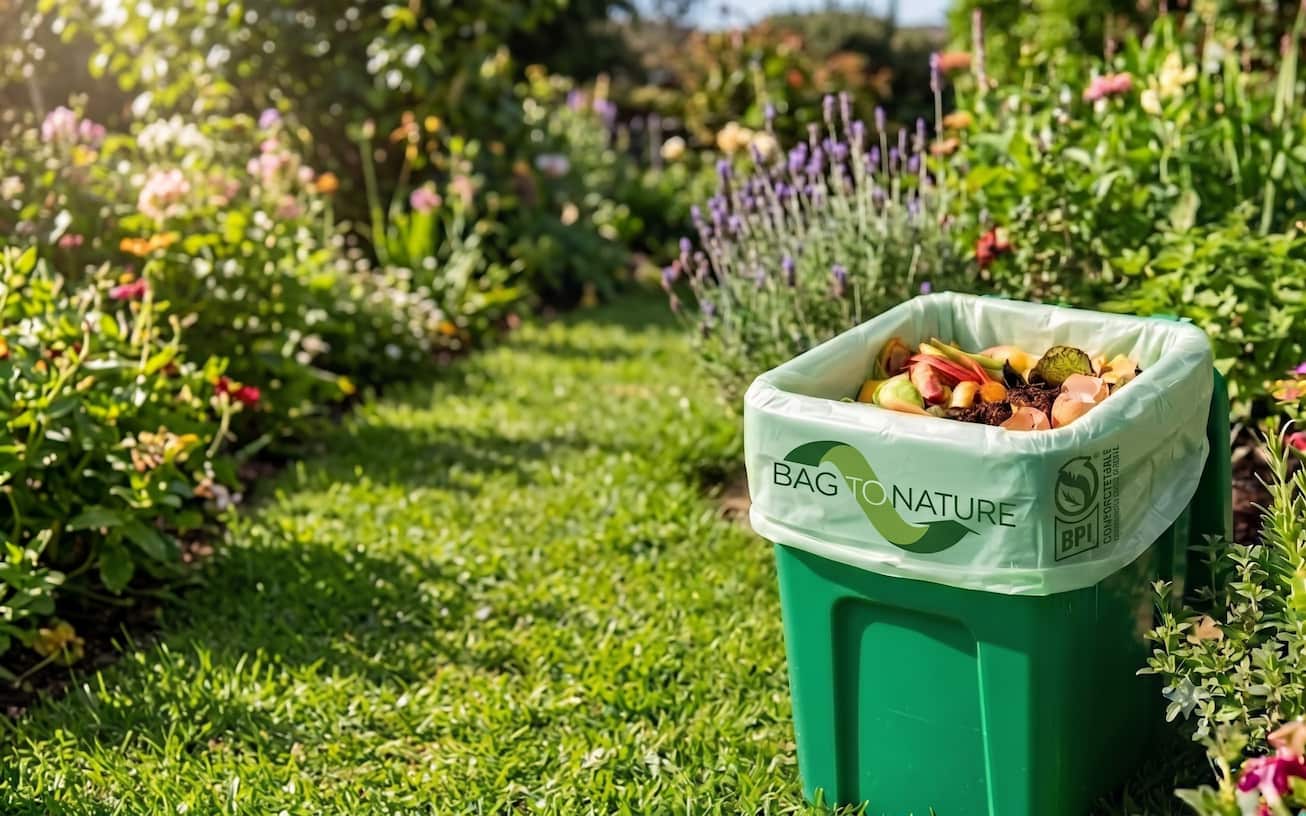
Switching to certified compostable bags makes organic waste management cleaner, simpler, and more sustainable. Engineered with dependable puncture resistance and leak protection, our bags keep kitchen and outdoor bins tidy without compromising performance.
Once placed into municipal green bins, Bag To Nature bags break down naturally alongside organic waste in commercial composting facilities — leaving zero microplastics or synthetic residues behind.